Operations management
Connect projects, menus, inventory, inspections, costs and safety records to reduce spreadsheet and chat fragmentation.
- Multi-site views
- Reports and alerts
- Role-based access
Product architecture
A food-service operating system for contract catering, corporate dining and restaurant groups. SaaS connects workflows, AI supports decisions, and equipment brings field data back into the loop.
5 layers
Apps, AI, data, IoT and deployment
4 scenarios
Catering, canteens, chains and supply
SEA ready
Chinese, English, Thai and Vietnamese localization path
Star Kitchen AI
SK Group AI Operating Layer
Core platform
Mobile apps, web management, reporting, inspections and collaboration form a shared operating layer. The objective is not just more metrics, but actions connected to sites, roles and suppliers.
Connect projects, menus, inventory, inspections, costs and safety records to reduce spreadsheet and chat fragmentation.
Let teams record inspections, feedback, tasks and training as part of their daily work.
Track onboarding, training, account health and review actions to support an ongoing service relationship.
Provide a path for integrating finance, purchasing, payments and existing customer systems.
AI engine
Define AI as explainable business capabilities: demand forecasting, menu planning, inventory alerts, food-safety checks, customer success and performance reviews.
Forecast
Combine historical sales, weather, holidays and customer patterns to support menus and preparation.
Detect
Identify unusual movement in inventory, waste, purchasing prices and inspection records.
Act
Turn alerts into replenishment, menu changes, supplier reviews or corrective tasks.
Review
Prepare meeting summaries, status views and accountable actions for continuous improvement.
Smart hardware
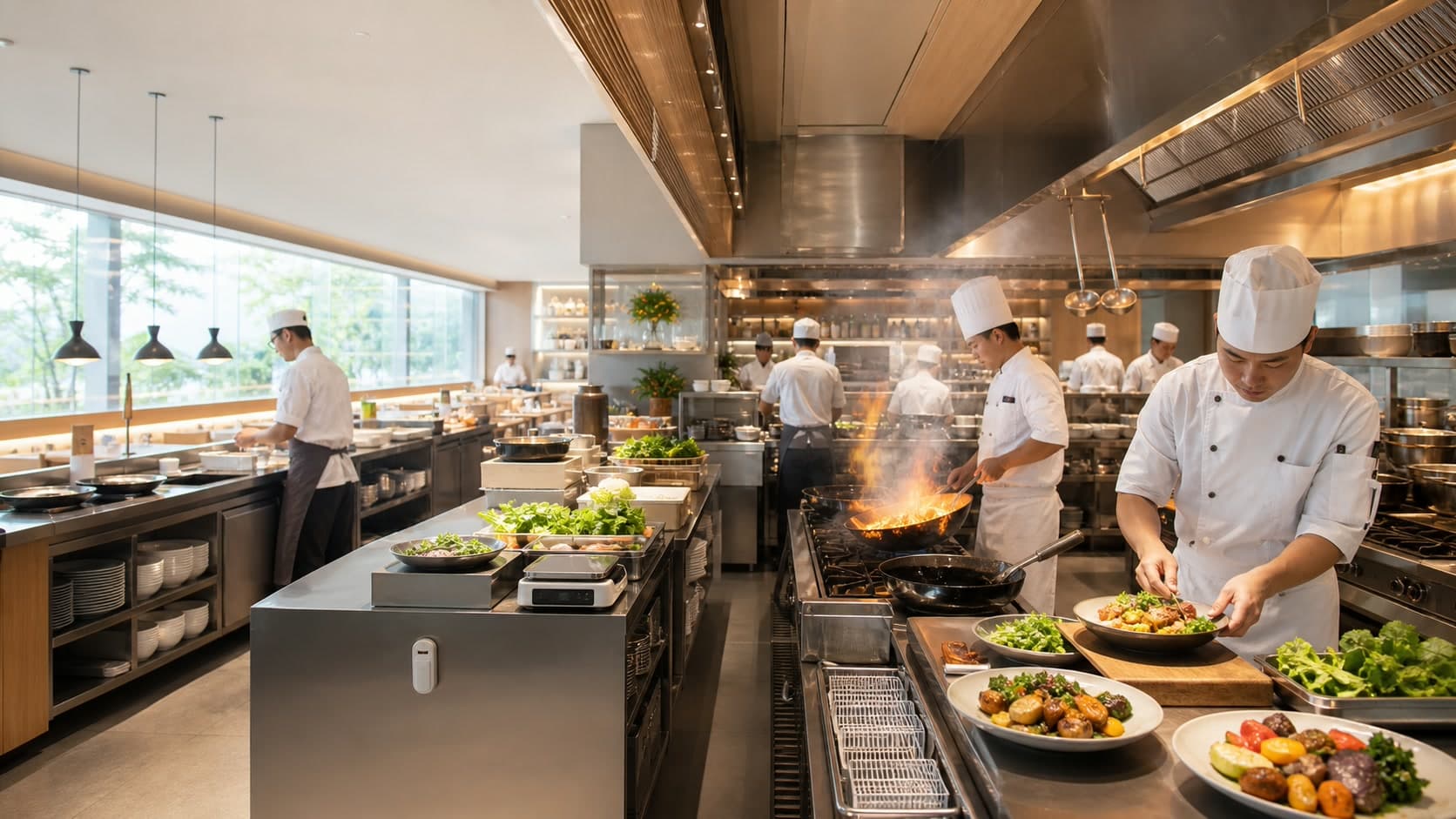
Weighing, vision, checkout and kitchen equipment help bring waste, production, consumption and safety records closer to the real operation.
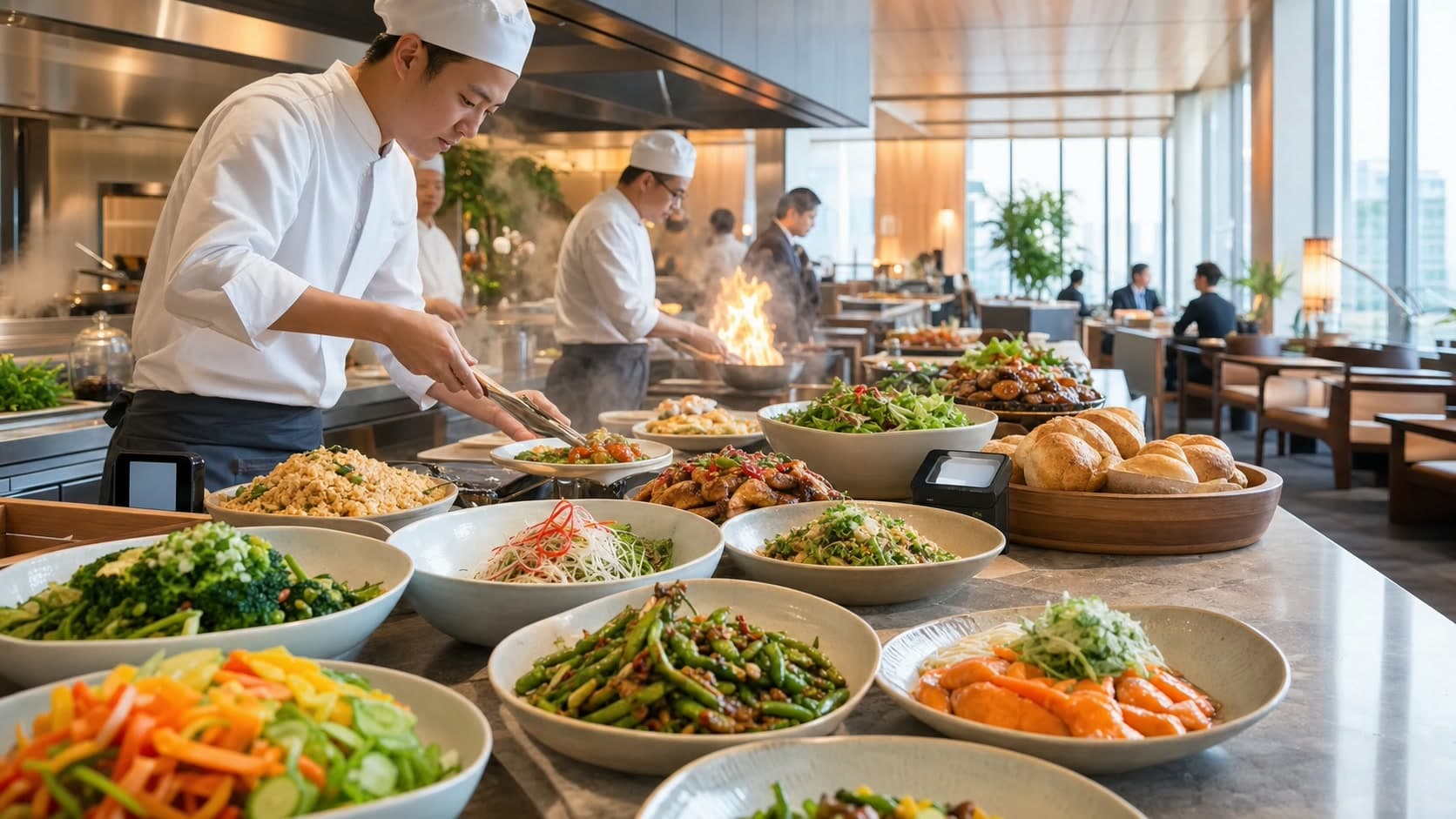
Record ingredients, work in progress and remaining quantities to identify waste and production deviations.
Support dish identification, hygiene checks and exception recording.
Feed demand patterns, peak periods and dish preferences back into menu planning.
Plan interfaces for production consistency, energy use and equipment status.
Share your business type, site count and existing systems so we can prepare a focused product discussion.